iTnews
  • Home
  • News
  • Technology
  • Security

Researchers crack iris recognition

By Marcos Colon
Jul 30 2012 12:30PM
Follow google news

Vulnerability revealed at Black Hat conference.

An international team of researchers has devised a method of reverse engineering code stored in biometric databases to fool iris recognition systems.
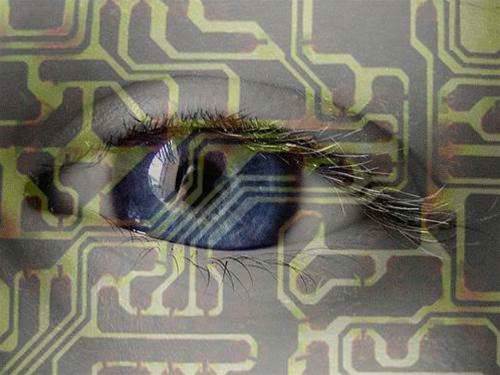

Researchers crack iris recognition
Linked gallery: Photos: BlackHat 2012

Iris recognition systems are currently deployed by corporations and law enforcement entities around the world, including at Amsterdam's Schiphol Airport and Google's data centres.

Such systems typically scan individuals' irises to produce code that is then filed in a database and used for future matching.

Professor Javier Galbally of the Universidad Autonoma de Madrid told the Black Hat conference last week that his team had developed a genetic algorithm to reproduce images of individuals' irises by reverse engineering the database code.

Australia has yet to introduce privacy laws to govern the use and storage of biometric information, despite moves to revoke an unsuccessful, voluntary industry code (pdf) earlier this year.

Hackers could then fool security systems by printing the image out to be scanned by the recognition system, for example, by patching the image onto a contact lens to be worn by the attacker.

Galbally said the iris provided among the most reliable forms of identification -- even better than fingerprints -- but "the main problem with the iris is the acquisition".

"Sensors are more expensive, and it's more difficult to acquire because you need more cooperation from the users," he noted.

"The commercial [iris] system only looks for the iris [code] and not an actual eye."

Galbally said there had not been any breaches reported as a result of a bypassing iris recognition systems through synthetic iris images.

"You never know if it's going to be dangerous or not, but the vulnerability is there," he said. "It's good that people are aware that these vulnerabilities exist."

Galbally's research was done in partnership with the West Virginia University in the US and the Biometric Recognition Group-ATVS.


This article originally appeared at scmagazineus.com

Add iTnews as your trusted source

Add iTnews As Your Trusted Source Add iTnews As Your Trusted Source
Got a news tip for our journalists? Share it with us anonymously here.
Copyright © iTnews.com.au . All rights reserved.
Tags:
biometricsscitechsecurity

Related Articles

  • Anthropic releases Mythos-class model for public use Anthropic releases Mythos-class model for public use
  • Apple bumps up security in fresh operating system releases Apple bumps up security in fresh operating system releases
  • Meta accuses NSO Group of violating court order by WhatsApp spear phishing Meta accuses NSO Group of violating court order by WhatsApp spear phishing
  • Researchers build self-replicating AI worm with BYO LLM Researchers build self-replicating AI worm with BYO LLM
Join our WhatsApp Channel

Partner Content

Why resilient communications are becoming critical infrastructure for modern enterprise IT
Promoted Content Why resilient communications are becoming critical infrastructure for modern enterprise IT
Intelligence × Trust: the equation that will decide Australia's AI winners
Promoted Content Intelligence × Trust: the equation that will decide Australia's AI winners
CommBank creates opportunities for technologists to upskill  with frontier AI companies
Partner Content CommBank creates opportunities for technologists to upskill with frontier AI companies
From test case to control tower: How DXC and ServiceNow are governing enterprise AI at scale
Promoted Content From test case to control tower: How DXC and ServiceNow are governing enterprise AI at scale

Sponsored Whitepapers

Agile in the AI Era: why projects still fail
When Technology Becomes the Blocker: Unlocking Real Outcomes from AI and Cloud
High-volume data sources for AI-driven security analytics
How healthcare organisations can get more value from cloud
1 in 3 companies lose SaaS data. Here’s how to prevent it

Events

  • iTnews State of Security Breakfast iTnews State of Security Breakfast

  • iTnews State of Data & AI Breakfast iTnews State of Data & AI Breakfast

  • The 2026 iAwards The 2026 iAwards
  • Integrate 2026 Integrate 2026
  • Security Exhibition & Conference Security Exhibition & Conference
Share on Facebook Share on LinkedIn Share on Whatsapp Email A Friend

Most Read Articles

Anthropic opens Claude Mythos Preview AI program to Australia

Anthropic opens Claude Mythos Preview AI program to Australia

Defence says Palantir is "sandboxed" in its environment

Defence says Palantir is "sandboxed" in its environment

Services Australia describes fraud, debt-related machine learning use cases

Services Australia describes fraud, debt-related machine learning use cases

Researchers build self-replicating AI worm with BYO LLM

Researchers build self-replicating AI worm with BYO LLM

techpartner.news logo
Sydney-based AI-cloud waste startup raises $3m
Brennan uses NiCE to modernise its contact centre
Impact Awards: Tecala slashes customer response times for fintech IQumulate
Interactive introduces private cloud platform
Digital61 expands cybersecurity portfolio
All rights reserved. This material may not be published, broadcast, rewritten or redistributed in any form without prior authorisation.
Your use of this website constitutes acceptance of nextmedia's Privacy Policy and Terms & Conditions.