Recent Australian projects to replace legacy core banking and insurance platforms have freed up a pool of mainframe programming skills for insurer Allianz Australia.

While competitors Suncorp and CommInsure installed new Oracle and SAP platforms, Allianz chief information officer Steve Coles said it would continue “[leveraging] what we have”.
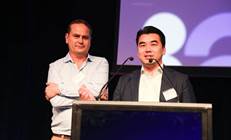
Coles described Allianz’s mixed environment of mainframe, Cobol applications and newer claims and customer service technologies at a CSC customer conference this week.
A 30-year-old Cobol application stack underpinned all digital transactions, he said, noting that the insurer had “managed to integrate [the technologies] seamlessly”.
In 2009, Allianz consolidated 60 Wintel servers onto a virtualised, IBM z10 mainframe under a $4 million IT infrastructure overhaul project.
The project left it with some 350 servers and a total of two mainframes by November that year. Coles said Allianz had since consolidated down to a single CSC-hosted mainframe to reduce complexity.
“I hate the term legacy technology, which is used a lot,” he said, highlighting an industry trend towards large-scale “rip-and-replace” projects.
“We’ve actually looked at what [our core platform] does and what it did was pretty good. It is pretty efficient and pretty reliable, and had a lot of investment in terms of functionality.
“Five, ten years ago, it wasn’t easy to connect to the digital world, [but] now we see other technologies that have matured and allow us to harness that legacy investment.
“For us, it’s been a key part of our strategy to reuse and simplify, rather than simply replace.”
Coles said the “only driver” for Allianz to move off its Cobol application stack in the near future was a shortage of developers familiar with the 63-year-old programming language.
He said the availability of Cobol developers was “something we monitor very closely”.
Allianz had 40 Cobol developers in its 350-person IT team and did not expect to face Cobol skills shortages for “the next five to seven years”.
“Post that, unless we manage our risk carefully, we could be left exposed of having people that can provide the right level of support,” Coles told iTnews.
“But we have some strategies around that,” he said, noting that Allianz would look to retain employees with Cobol skills and a good understanding of how its applications worked.
“It’s actually becoming a lot easier to get access to [Cobol] resources because a lot of [organisations] are getting out of that technology stack,” he added.
“We actually have some very young Cobol developers that are working with us now – very young for me means under 30.
“[Recruiting Cobol resources is] probably easier now than it’s every been in the past.”
Scaling without the cloud
Coles told the conference that insurance CIOs were challenged to balance system stability and innovation and deliver modern, secure services that could scale to meet business demands in a cost-effective manner.
“IT has never been more important in insurance,” he said, noting that 70 percent of Allianz sales now took place online instead of through contact centres, compared with 30 percent in 2005.
In January, the insurer experienced a 30 percent increase in claims and calls to its contact centres due to a number of natural disasters and a particularly successful advertising campaign.
Coles said the organisation scaled up to meet the demand by bringing forward a small hardware upgrade that was scheduled to take place later on in the year.
Although he noted that infrastructure-as-a-service could benefit scalability, he said Allianz had yet to use cloud services besides salesforce.com’s customer relationship management system.
“I can see some merits in [infrastructure-as-a-service] but for us we address that in different ways,” he said, noting that Allianz’s consolidated mainframe allowed it to quickly scale up resources.
“I see [cloud computing] as another tool in the kitbag. If it’s specifically around responding to scalability in an efficient way, I think it may have a role.
“But most of the decisions we take are long-term decisions – it’s normally five to ten years – and if you look at the total cost of ownership of a cloud solution, it becomes very expensive compared to other options.”









 iTnews State of Security Breakfast
 iTnews State of Data & AI Breakfast
 The 2026 iAwards
.jpg&w=120&c=1&s=0) Integrate 2026
Integrate 2026
 Security Exhibition & Conference







_(1).jpg&h=140&w=231&c=1&s=0)