“Oh f**k, the internet is here" - Anonymous
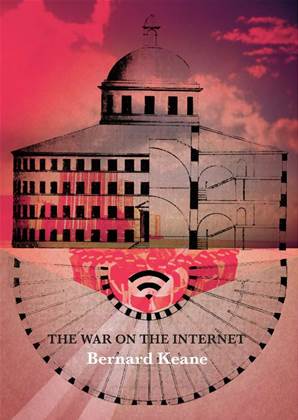
Pre-digital media and geographically-limited communities afforded considerable opportunities for intermediaries to establish business models and mechanisms of control based on exploiting both economies of scale (a key factor driving the cyclical process Timothy Wu has outlined in The Master Switch) and the dependence of consumers on a few, highly centralised media for information and entertainment and limited networks for trade and commerce.
The privileged intermediaries of late twentieth century Western economies located themselves at crucial points in the distribution paths of content and products. At those points, they were able to exploit consumers’ and voters’ lack of alternative sources of products and information. They played the role, in effect, of gatekeepers. And online interconnectedness and gatekeeping have been in fundamental conflict since the first mass usage of the internet emerged in the 1990s.
Gatekeepers included governments and major political parties, the legal industry, large corporations, major religions and the media. Their shared status did not mean they had shared interests, or acted in concert, but all had similar operational models, relying on privileged positions in the analog networks of the twentieth century, controlling information flows to their advantage and shaping markets to their own interests.
Gatekeepers also had in common not merely their status as pre-digital élites, the kings of the analog heap, but their flawed response to interconnectedness. As McLuhan noted in relation to the evolution of analog media markets, “the new technological environments generate the most pain among those least prepared to alter their old value structures.” Gatekeepers misinterpreted the significance of interconnectedness for them and persisted with legacy business models long after it became apparent those models were breaking down – as if generations of easy living off gatekeeping had destroyed their capacity to innovate. Indeed, for these gatekeepers, innovation was a major threat to them. Some examples of different forms of gatekeeping offer an insight into how their business models or modes of operation have been affected by interconnectedness.
The copyright industry
The audio-visual content industry – or to call it by its proper name, the copyright industry – was the earliest to see its gatekeeper-based business model imperilled, and over a decade later it continues to cling to its old value structure of command and control. The copyright industry seems to have arrogated to itself the role of internet crash test dummy, demonstrating to other gatekeepers how not to respond to the impact of the internet. According to 2011 data from Cisco, peer-to-peer filesharing accounted for 40 percent of all consumer internet traffic in 2011, and it is predicted to continue to grow at over 20 percent per annum, although it has been overtaken in North America by legitimate video traffic such as Netflix.
Love it or loathe it, filesharing is interconnectedness in action. It replicates the analog tradition of format shifting and sharing of content – dubbing an album onto a tape and giving it to a friend – but eliminates geography from the process. The emergence of filesharing even before most internet users had sufficient bandwidth to routinely download audio content suggests filesharing is about as close to an instinctive consequence of interconnectedness as it’s possible to get; it predates even the earliest social media platforms. However, the factors driving filesharing differ according to markets. In Australia, for example, much of it is driven by the high cost of retail CDs and DVDs, the refusal of free-to-air television networks (no slouch as gatekeepers themselves) to screen foreign programs for many months after they’ve screened in the US or UK, and the cost of legally-available content via platforms like iTunes, which charges Australian users far more than, for example, American users.
The initial response of the copyright industry to filesharing was to sue not merely those facilitating or enabling it, but to sue its customers as well – individuals who uploaded or downloaded content illegally – and to avoid as far as possible providing legal access to content in forms consumers wanted i.e with no superprofit margin, on-demand and free of restrictions on use.
This wasn’t a successful strategy: apart from the sheer cost of endless litigation, the industry’s truculence and aggressive legal tactics saw an apparently endless parade of grandmothers, small children, homeless people and even the dead receiving writs from copyright industry lawyers. This included the impressive 2006 prosecution of one Shawn Hogan for downloading Meet The Fockers, a movie that Hogan not merely hadn’t downloaded and already owned on DVD, but which, on examination, it turned out the plaintiffs didn’t possess copyright to. After failing to convince consumers that filesharing was a profound evil – the industry still spends millions of dollars paying lucky consultants to invent modelling demonstrating the catastrophic economic impacts of filesharing – the industry focused on outsourcing enforcement of copyright, to offload both the cost and reputational damage of litigation.
There has been some experimentation with outsourcing it to the copyright equivalent of ambulance-chasing law firms (packet chasers?), thereby relying on a no-win-no-fee approach to address the cost of litigation. This may yet prove a viable model, but in both the UK and the US the ruthless but sloppy tactics of law firms trying to sue hundreds of thousands of John Does has repeatedly drawn judicial ire. More successful has been the effort to shift the cost burden of enforcing copyright onto governments, and thus taxpayers, and internet service providers. This has reduced the industry’s costs, but filesharing traffic continues to expand without apparent inconvenience.



.jpg&h=140&w=231&c=1&s=0)
.jpg&h=140&w=231&c=1&s=0)






 iTnews State of Security Breakfast
 iTnews State of Data & AI Breakfast
 The 2026 iAwards
.jpg&w=120&c=1&s=0) Integrate 2026
Integrate 2026
 Security Exhibition & Conference








_(1).jpg&h=140&w=231&c=1&s=0)