

Troy Lange knows that just mentioning cellphones is enough to give security officers heartburn at the National Security Agency.
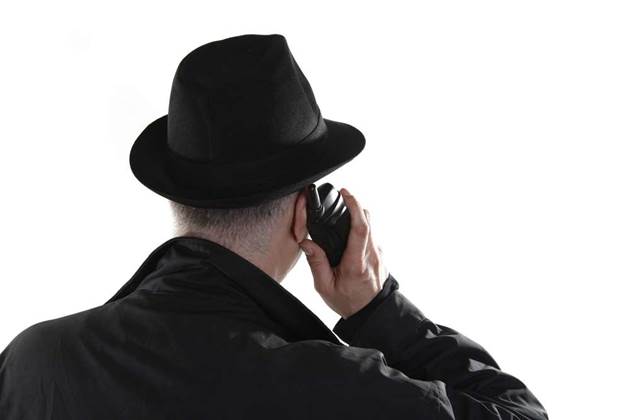
Lange, as the NSA's mobility mission manager, is developing a smartphone that he wants to bring inside the super-secret US spy agency to access classified information and apps while on the move.
He wants it to work as easily as any of the smartphones those that are so ubiquitous in the outside world.
That is no small vision for an agency where entire buildings are designated as Sensitive Compartmented Information Facilities, known as SCIFs in spy speak, with many restrictions to ensure the handling and discussion of secret information stays secure.
Visitors to the Fort Meade, Maryland, NSA complex are not allowed to bring outside cellphones into the building.
Lange argues that using smartphones inside areas that deal with secret material will increase efficiency.
"I want to get this into everybody's hands" -- every employee in the Defense Department, intelligence community and across government, he said, while acknowledging that kind of talk makes "the security people's heads pop off."
He is working on a pilot project expected to begin running late this year or early next year using a smartphone that looks like any bought in stores but with security configurations to allow top-secret communication.
The NSA, which protects government computer networks from cyber threats and conducts electronic eavesdropping to detect national security threats, is known for its top-flight technological expertise.
But what is an everyday tool for the public -- a mobile device for conducting business and personal chores -- is a source of great concern inside intelligence agencies because of the potential for being hacked or unauthorized transmission of secrets.
That means there will have to be a culture change at the NSA, Lange said as he explained his vision in an interview with Reuters and during a three-day NSA conference in Florida that ended Thursday.
"How cool would that be?"
"It's moving away from this whole concept between a classified device and an unclassified device," Lange said. "It's the information that is classified. So the intent is how can I gain access to that classified information in a mobile way."
His pilot project uses commercially available smartphones and software that would then be configured in-house with necessary security features.
"Think of the capabilities that would be in the hands of the warfighter when every one of them has a mobile device with which they could communicate back to their general," he said.
"So you have boots on the ground, they have the camera on their phone, they can say look what's going on here and be able to bring that information all back to the decision-makers in real time and have them act in real time. How cool would that be? And it's secure," Lange said.
The US government has secure cellphones but they are bulky and limited to making calls up to top-secret level and connecting to the Secret Internet Protocol Router Network (SIPRNet).
Generals and others have been known to become so frustrated with the existing devices that they switch to personal cellphones to conduct classified conversations, according to a former US official.
Lange said that if he wants access to email on the NSA's stand-alone computer network now, he has to sit at a desk -- "and I'm never at my desk." He cannot get on it even on a laptop that is approved to hold information within a SCIF.
"I still don't have that connectivity to a network, which means that the only way I can get to any of my data -- email, calendar invites, you name it -- I have to sit down at a wired station to get to it," Lange said.
He also envisions a classified app store down the road, wifi inside a SCIF, and the ability to use the same phone to make public calls through a mechanism that would switch off the classified network by a trigger such as dialing star-nine.
"All of these things that people do and have gained incredible efficiencies from, we are not because we haven't figured out how we can use this kind of technology within a building," Lange said.
(Editing by Warren Strobel and Bill Trott)




.jpg&h=140&w=231&c=1&s=0)

.jpg&h=140&w=231&c=1&s=0)


 iTnews State of Security Breakfast
 iTnews State of Data & AI Breakfast
 Forrester's AI Forum Sydney
 The 2026 iAwards
.jpg&w=120&c=1&s=0) Integrate 2026
Integrate 2026








_(1).jpg&h=140&w=231&c=1&s=0)
