iTnews
  • Home
  • News
  • Technology
  • Oddware

Robotic sleeves improve thought-controlled computing

By Liz Tay
Dec 15 2010 1:28PM
Follow google news

Scientists build artificial muscle feedback system.

US researchers have built a robotic sleeve that improves thought-controlled computing by translating a cursor's movements into physical sensations.
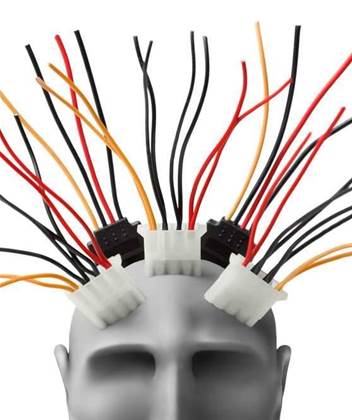
Robotic sleeves improve thought-controlled computing

Two adult monkeys were trained to control a computer cursor using brain signals, with electrodes collecting and transmitting signals from their motor cortex brain cells to a computer.

In the first part of the experiment, the monkeys controlled the cursor simply by looking at the computer screen and thinking about moving it to hit a target.

The monkeys were then fitted with a robotic "sleeve" that fit over an arm and moved the arm according to the cursor's movement.

Research leader Nicholas Hatsopoulos of the University of Chicago found that monkeys hit the target 40 percent faster and more directly with the aid of the sleeve.

"The monkey improved their control of the cursor by 40 percent with the use of the robotic sleeve," Hatsopoulos told iTnews.

The study was based on the concept of proprioception, which is the sensation of a body part's position and motion.

Although most current brain-machine interfaces relied solely on visual feedback, Hatsopoulos' team believed proprioception "extremely important" for controlling motion.

"We know from patients who have lost proprioception that they have an extremely difficult time controlling their movements," he explained.

The team was still at "very early stages" of research, and did not yet have approval to test the sleeve on humans.

However, Hatsopoulos noted that Japanese researchers have built "very interesting wearable robots" for humans, including exoskeletons for farmers and the iFEEL-IM simulation device.

The research, titled "Incorporating feedback from multiple sensory modalities enhances brain-machine interface control", was published in the December 15 issue of The Journal of Neuroscience.

Hatsopoulos believed that the team's findings may pave the way for devices that include multiple forms of natural or artificially produced sensory feedback to benefit paralysed patients.

"I believe brain-machine interfaces for motor control will become commercially available in the next five years," he said.


Add iTnews as your trusted source

Add iTnews As Your Trusted Source Add iTnews As Your Trusted Source
Got a news tip for our journalists? Share it with us anonymously here.
Copyright © iTnews.com.au . All rights reserved.
Tags:
interfaceoddwarerobotscitech

Related Articles

  • Australia to get a space agency Australia to get a space agency
  • Cuscal glitch sees Woolies shoppers charged twice Cuscal glitch sees Woolies shoppers charged twice
  • Cryptocurrency community readies for Bitcoin Cash fork Cryptocurrency community readies for Bitcoin Cash fork
  • Researchers release code that can detect body language Researchers release code that can detect body language
Join our WhatsApp Channel

Partner Content

Agile isn’t the problem: why projects still fail, and what’s missing
Partner Content Agile isn’t the problem: why projects still fail, and what’s missing
Thomas Peer Solutions unveils data cloud platform and executive leadership forum for 2026
Partner Content Thomas Peer Solutions unveils data cloud platform and executive leadership forum for 2026
Why resilient communications are becoming critical infrastructure for modern enterprise IT
Promoted Content Why resilient communications are becoming critical infrastructure for modern enterprise IT
Scalable AI solutions: secure delivery

Sponsored Whitepapers

Are Australian organisations as cyber-ready as they think?
Are New Zealand organisations as cyber-ready as they think?
From visibility to execution:  Fixing the SaaS management gap
From visibility to execution: Fixing the SaaS management gap
When cyber risk has no clear owner: A practical guide for senior Australian business leaders
Agile in the AI Era: why projects still fail

Events

  • iTnews State of Security Breakfast iTnews State of Security Breakfast

  • iTnews State of Data & AI Breakfast iTnews State of Data & AI Breakfast

  • Forrester's AI Forum Sydney Forrester's AI Forum Sydney

  • The 2026 iAwards The 2026 iAwards
  • Integrate 2026 Integrate 2026

Share on Facebook Share on LinkedIn Share on Whatsapp Email A Friend

Most Read Articles

Key EDS witness bought internet degree

Key EDS witness bought internet degree

Satellite failure caused global GPS timing anomaly

Satellite failure caused global GPS timing anomaly

.XXX top level domain goes live

.XXX top level domain goes live

RFID chips may cause cancer

RFID chips may cause cancer

techpartner.news logo
Sydney-based AI-cloud waste startup raises $3m
Brennan uses NiCE to modernise its contact centre
Impact Awards: Tecala slashes customer response times for fintech IQumulate
Interactive introduces private cloud platform
Digital61 expands cybersecurity portfolio
All rights reserved. This material may not be published, broadcast, rewritten or redistributed in any form without prior authorisation.
Your use of this website constitutes acceptance of nextmedia's Privacy Policy and Terms & Conditions.