iTnews
  • Home
  • News
  • Business
  • Strategy

Aussie workers happy with IT policies

By Liam Tung
Nov 9 2010 6:16AM
Follow google news

Still face restrictions.

While a majority of workers across the globe remained dissatisfied with their company's IT policies, Australians by and large were content, according to a survey by networking giant, Cisco.
Aussie workers happy with IT policies

A survey covering 2,600 workers across 13 nations revealed that over a third of employees (41 percent) intentionally broke their company's IT policies to get the job done; that is, by using a banned application which they claimed was necessary for their work.

Just 31 percent of Australians broke policy for that reason, with only the UK, Japan and Italy reporting lower figures under this reason for breaching policy.

However Australians also felt - or at least believed - IT policies would be enforced. While 20 percent of respondents globally broke IT policy because they thought it was unlikely the company would enforce it, just 9 percent of Australians believed this to be the case.

Australians were more likely than other nations to break the IT policy because they were busy.

Mobile policies

Australian workers were also generally happy with their company's IT policies regarding mobile devices.

Across the board 64 percent thought their company needed to adjust policy, but most Australians (84 percent) reported there was no need for significant improvements.

In addition, no less than half the respondents from the US, Brazil, France, Russia, Spain, China, India and Japan said their company's mobile device policy needed updating, while just 37 per cent of Australians believed this needed to occur.

Restrictions on iPad, phone use

Despite Australians' satisfaction with IT policies, its workers were just as restricted as their peers in what they are able to use at work.

A quarter of Australian workers could not use their personal mobile phones for work, which was higher than all other nations except Spain.

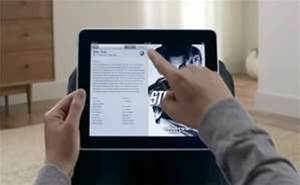
And over a fifth of Australian workers - compared to the global average of 15 percent - were prevented from using their iPads at work.

Just under half of the Australians surveyed reported online games being banned, while 39 percent of Australians reported "social networking" (Facebook, You Tube) being banned -- both consistent with the average across the 13 nations.

Twitter was treated as a separate category and was slightly less frequently banned than other social media.

Almost a third of respondents said that the IT department never explained why a certain policy existed, according to Cisco.


Add iTnews as your trusted source

Add iTnews As Your Trusted Source Add iTnews As Your Trusted Source
Got a news tip for our journalists? Share it with us anonymously here.
Copyright © iTnews.com.au . All rights reserved.
Tags:
aussieciscohappyhardwareitpolicysoftwarestrategysurveyworkers

Related Articles

  • Perth Airport to deploy 70 IT, OT systems for new terminal Perth Airport to deploy 70 IT, OT systems for new terminal
  • Apple rolls out new, AI-powered Siri Apple rolls out new, AI-powered Siri
  • Home Affairs opens internal "conversation" on adopting three types of AI Home Affairs opens internal "conversation" on adopting three types of AI
  • Meta accuses Australia of breaching free trade agreement Meta accuses Australia of breaching free trade agreement
Join our WhatsApp Channel

Partner Content

Agile isn’t the problem: why projects still fail, and what’s missing
Partner Content Agile isn’t the problem: why projects still fail, and what’s missing
Scalable AI solutions: secure delivery
CommBank creates opportunities for technologists to upskill  with frontier AI companies
Partner Content CommBank creates opportunities for technologists to upskill with frontier AI companies
Onel Consulting Strengthens Its White-Glove Services With Strategic COO Appointment
Promoted Content Onel Consulting Strengthens Its White-Glove Services With Strategic COO Appointment

Sponsored Whitepapers

Agile in the AI Era: why projects still fail
When Technology Becomes the Blocker: Unlocking Real Outcomes from AI and Cloud
High-volume data sources for AI-driven security analytics
How healthcare organisations can get more value from cloud
1 in 3 companies lose SaaS data. Here’s how to prevent it

Events

  • iTnews State of Security Breakfast iTnews State of Security Breakfast

  • iTnews State of Data & AI Breakfast iTnews State of Data & AI Breakfast

  • The 2026 iAwards The 2026 iAwards
  • Integrate 2026 Integrate 2026
  • Security Exhibition & Conference Security Exhibition & Conference
Share on Facebook Share on LinkedIn Share on Whatsapp Email A Friend

Most Read Articles

Meta accuses Australia of breaching free trade agreement

Meta accuses Australia of breaching free trade agreement

Home Affairs opens internal "conversation" on adopting three types of AI

Home Affairs opens internal "conversation" on adopting three types of AI

Gov to sustain key tech programs with new billions

Gov to sustain key tech programs with new billions

Australia Post's future IT estate to rely on 13 "platform ecosystems"

Australia Post's future IT estate to rely on 13 "platform ecosystems"

techpartner.news logo
Sydney-based AI-cloud waste startup raises $3m
Brennan uses NiCE to modernise its contact centre
Impact Awards: Tecala slashes customer response times for fintech IQumulate
Interactive introduces private cloud platform
Digital61 expands cybersecurity portfolio
All rights reserved. This material may not be published, broadcast, rewritten or redistributed in any form without prior authorisation.
Your use of this website constitutes acceptance of nextmedia's Privacy Policy and Terms & Conditions.