iTnews
  • Home
  • News
  • Technology
  • Oddware

Tiny, flying robots form floating 3D display

By Liz Tay
Feb 26 2010 3:49PM
Follow google news

Pixel swarm in development.

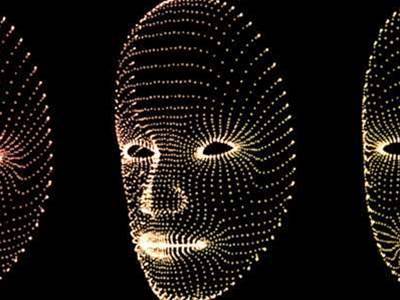
Forget dorky 3D glasses - future displays could comprise swarms of "micro-helicopters" that each act as tiny, flying pixels.
Tiny, flying robots form floating 3D display

Researchers are developing the so-called "Flyfire" technology at the Massachusetts Institute of Technology.

It involves a large number of remotely controlled, self-organising helicopters that contain small LEDs, which are controlled digitally and act in synch to generate three-dimensional, free-form displays.

The whole system would be choreographed by one central computer, with each pixel equipped with self-stabilisation and networking functionality.

Besides offering an immersive 3D experience, the system would also be scalable to infinitely high resolution, researchers expect.

"One of the advantages of this idea is to have a system that is scalable in real time," lead researcher E Roon Kang told iTnews.

"As we envision the system now, [it] would not have a high-limitation on its resolution."

As the research project is still in its early stages, the researchers are currently able to control "just a handful" of helicopters simultaneously.

To demonstrate its potential, the researchers have produced a computer-generated simulation, showing how the system could depict Leonardo da Vinci's Mona Lisa in 3D.

"The key is that the pixels are flying, thus a group of pixels can transform into an articulated shape," Kang explained.

"So we have another channel of information, the shape of the display, along with its displayed content which is delivered by different colour of pixels."

The researchers currently face challenges in logistics and power management. Charging was an issue, Kang said, although was unable to disclose exactly how much power each pixel would require.

Scaling up was also a hurdle, as flying thousands of devices in sync required "very different architecture" to organising a hundred.

The researchers are planning an art installation based on the Flyfire technology, in which the pixels recharge every few minutes and then perform in space.

Future applications could include more environmentally friendly fireworks, or a resilient display for emergency situations, Kang said.


Add iTnews as your trusted source

Add iTnews As Your Trusted Source Add iTnews As Your Trusted Source
Got a news tip for our journalists? Share it with us anonymously here.
Tags:
displaymitoddwareresearchrobotscreen

Related Articles

  • Australia to get a space agency Australia to get a space agency
  • Cuscal glitch sees Woolies shoppers charged twice Cuscal glitch sees Woolies shoppers charged twice
  • Cryptocurrency community readies for Bitcoin Cash fork Cryptocurrency community readies for Bitcoin Cash fork
  • Researchers release code that can detect body language Researchers release code that can detect body language
Join our WhatsApp Channel

Partner Content

Agile isn’t the problem: why projects still fail, and what’s missing
Partner Content Agile isn’t the problem: why projects still fail, and what’s missing
Why resilient communications are becoming critical infrastructure for modern enterprise IT
Promoted Content Why resilient communications are becoming critical infrastructure for modern enterprise IT
You meet the security standard. Shame no one can see it
Promoted Content You meet the security standard. Shame no one can see it
Thomas Peer Solutions unveils data cloud platform and executive leadership forum for 2026
Partner Content Thomas Peer Solutions unveils data cloud platform and executive leadership forum for 2026

Sponsored Whitepapers

When cyber risk has no clear owner: A practical guide for senior Australian business leaders
Agile in the AI Era: why projects still fail
When Technology Becomes the Blocker: Unlocking Real Outcomes from AI and Cloud
High-volume data sources for AI-driven security analytics
How healthcare organisations can get more value from cloud

Events

  • iTnews State of Security Breakfast iTnews State of Security Breakfast

  • iTnews State of Data & AI Breakfast iTnews State of Data & AI Breakfast

  • Forrester's AI Forum Sydney Forrester's AI Forum Sydney

  • The 2026 iAwards The 2026 iAwards
  • Integrate 2026 Integrate 2026

Share on Facebook Share on LinkedIn Share on Whatsapp Email A Friend

Most Read Articles

RFID chips may cause cancer

RFID chips may cause cancer

Satellite failure caused global GPS timing anomaly

Satellite failure caused global GPS timing anomaly

.XXX top level domain goes live

.XXX top level domain goes live

Chinese porn king jailed for life

Chinese porn king jailed for life

techpartner.news logo
Sydney-based AI-cloud waste startup raises $3m
Brennan uses NiCE to modernise its contact centre
Impact Awards: Tecala slashes customer response times for fintech IQumulate
Interactive introduces private cloud platform
Digital61 expands cybersecurity portfolio
All rights reserved. This material may not be published, broadcast, rewritten or redistributed in any form without prior authorisation.
Your use of this website constitutes acceptance of nextmedia's Privacy Policy and Terms & Conditions.