

Last Monday, Jon Wellinghoff, chairman of the US Federal Energy Regulatory Commission presented the Obama Administration's vision statement for smart power grids.



He discussed regulations, markets and the environment but unfortunately ignored security of systems and customer account information.
That was only a few months after the US Department of Energy played down reports broken in the Wall Street Journal that Chinese hackers compromised the US electricity supply grid.
Smart grids, utilities networks that respond intelligently to price signals and peak demands, are rolling out around the world over the next 20 years at a cost likely to be in the many billions of dollars. Australian power utilities and especially those in Victoria are on track to start their commercial roll-outs next month, which will continue until at least 2013.
The smart home is becoming a reality in the developed world with energy efficiency and reduction in carbon footprints riding high on the agendas of most governments. But in their rush to squeeze efficiencies from power, water and gas grids, utilities, energy regulators, governments and technology providers forgot the consumer.
To benefit from the confluence of technological advances in smart meters that are operated remotely, internet communications and smart appliances that will digitise our grids we must first lay secure foundations for privacy of customer activity and security of the networks from attack.
Privacy
Data on an individual's energy use is valuable for marketing organisations. Sure, this information should remain protected by privacy laws but so is plenty of other personally identifying information on the internet which seems to seep through the cracks to enter the public record.
Unsurprisingly, Google has spotted a niche and is testing PowerMeter, a secure Google gadget application to show consumers their electricity use. Google says it's being altruistic by developing this so consumers can access their personal electricity information helping them to make smarter energy choices.
But while it offers consumers useful and up-to-date information, I'm sure targeted advertising will be spammed depending on Google's analysis. This concept will spawn a thousand software developers and will probably end up being an iPhone app.
Information about energy and utility-resource use should always belong to the consumer. But just like an ISP collects download data from a subscriber for billing so, too, the utilities will keep such information for the same reason.
Smart meters should provide information to the consumer so they know who else collects and stores their usage data. Perhaps utilities should introduce their own version of the Payment Card Industry Data Security Standards (PCI DSS) to address the secure retention of customer information? Maybe they will be more diligent than organisations that are weekly caught out flouting the standard.
Hacking
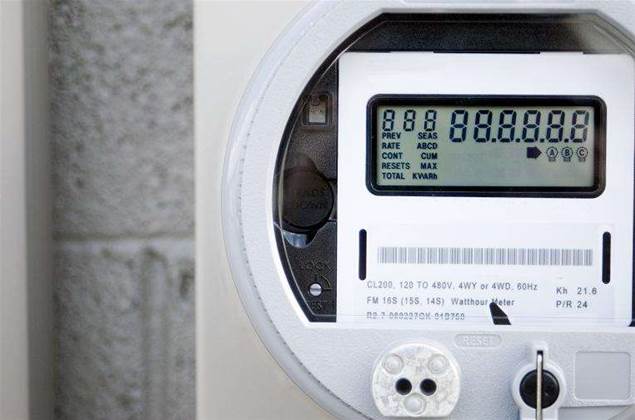
The key to the smart grid is the meter that is a two-way communications device with a gateway.
The problem is a lack of encryption and decent authentication so, with some reverse-engineering, Joe Hacker can probably shut down the power to someone's home. And there may be problems with updating the meter's internal software (known as "firmware").
This affects the end-user and introduces vulnerabilities to the critical infrastructure of the grid.
The recent Australian Business Assessment of Computer User Security survey by the Australian Institute of Criminology found the computer-security incident experienced by the highest proportion of victimised businesses was a virus or other malicious code.
Sixty-four percent of businesses that were victimised by one or more computer security incidents (65% of small, 61% of medium, 52% of big businesses) experienced this type of attack. The most common effect was hardware or software corruption.
That's a sobering fact for Australian businesses pushing new devices to customers and interact with them over the internet.
Hackers will look for vulnerabilities in these devices and their networks. Just like identity theft was spawned by "dumpster diving" - people searching through rubbish bins for bank statements - why not walk up to a household electricity meter to discover its unique identifier then use this information in the online environment for financial gain?
In time such information could be as valuable in the online criminal marketplace as credit card numbers, even a prompt question as a login challenge for password protected websites. With meters connected remotely over wireless networks, the exploit could be as simple as driving up the street collecting personally identifiable information, a process colourfully known as "wardriving".
All of these networked devices raise the prospect of them being remotely controlled in big numbers, just like we see in traditional botnets, zombie-like hordes of PCs under a malicious hacker's control and usually bent to nefarious and illicit ends.
Once infected by malware, an electricity meter (or similar) is under the control of the exploit owner, who may send instructions to turn power on or off, reveal information about the owner of the device or its power use.
Remember how online gambling sites used to be hit by denial of service attacks followed up by extortion requests? A savvy criminal group could do the same thing with a utilities provider after they have remotely disconnected customers en masse or targeted institutions such as hospitals. The resulting drop in public confidence would be disastrous.
Boutique system-penetration companies claim they can already do this and more.
And a cunning customer may hack their own meter to get it to reveal less electricity use than actual, resulting in a lower power bill.
Consumers
The average computer user struggles to keep their anti-virus software current and properly configure their firewall. How will they cope with internet-enabled utility connections?
There are many internet sites awash with safety messages but the incidence of end-user compromises keeps growing. Consumers may reject having to learn more skills to protect their homes' infrastructure if it all becomes too hard.
It is incumbent on those in the supply chain - government, energy providers and ISPs - to support and protect consumers during this change. Institutions must work to change consumer behaviour to ensure implementation is successful. That's not a get out of jail free card for the user. They still need to use act sensibly just as they would when surfing the web.
Regulators
With the advent of the smart grid we think of energy regulators focusing on retail prices that vary with system conditions and demand, therefore enabling customers to lower their power bills by setting appliances to run when prices are lower. But this new dynamic will force them to change their thinking to look at issues discussed above.
Unless regulators take security of systems and customer account information seriously and implement appropriate policy and procedures, shifting consumers behaviour to variable electricity rates or to pay vastly increased rates for reliable power supply at peak times will stay unmet.
Nigel Phair was the team leader investigations at the Australian High Tech Crime Centre from 2003-2007. He is an author, recognised Australian IT security authority and SC Magazine Australia Awards judge. He will speak at the e-Crime Symposium in Sydney on August 4. Details at the conference website at www.ecrimesymposium.com.




.jpg&h=140&w=231&c=1&s=0)
.jpg&h=140&w=231&c=1&s=0)


 iTnews State of Security Breakfast
 iTnews State of Data & AI Breakfast
 Forrester's AI Forum Sydney
 The 2026 iAwards
.jpg&w=120&c=1&s=0) Integrate 2026
Integrate 2026







_(1).jpg&h=140&w=231&c=1&s=0)
