iTnews
  • Home
  • News
  • Technology
  • Security

Eyeball reflexes to improve biometric authentication

By Liz Tay
Sep 9 2008 5:09PM
Follow google news

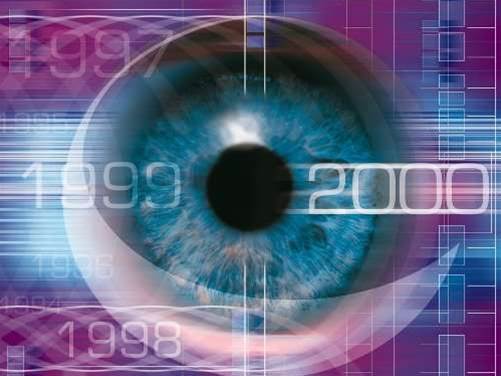
Researchers are developing a new approach to user authentication that cannot be spoofed, even with the most sophisticated contact lenses or surgery.

Eyeball reflexes to improve biometric authentication
The method is based on eye saccades, which are the rapid, tiny, reflex movements of a user’s eyeball.

Since reflexes are said to be beyond conscious control, the researchers expect it to be impossible for attackers to adequately replicate an authorised individual’s saccades.

“Biometric information can easily be leaked or copied,” said Masakatsu Nishigaki, who is a researcher at the Shizuoka University in Japan.

“It is therefore desirable to devise biometric authentication that does not require biometric information to be kept secret,” he said.

Nishigaki and his research partner Daisuke Arai are working towards the long-term aim of creating an authentication system which is directly based on differences in human reflexes.

However, the researchers so far have been unable to identify any human reflexes that exhibit sufficient differences between individual people to enable their use in user authentication.

Currently, the researchers are investigating what Nishigaki describes as an ‘indirect’ method of extracting differences in human reflexes.

The method examines the blind spot, which is a fixed region on the retina of the eye, and determines its position relative to the direction of the gaze.

User authentication is carried out by displaying a target within and outside a person’s blind spot, and using eye tracking technology to measure the reflex time taken until the eye movements occur.

As the method still relies on the shape of the user’s eye, an impostor may be successful with the use of surgery or sophisticated contact lenses, the researchers say.

However, the researchers expect each pattern of responses to be unique to the individual and the method to reduce greatly the likelihood of spoofing.

In a preliminary experiment with ten test subjects, the researchers achieved zero spoofing success rate with their method.

As the authentication system requires a costly point-of-gaze detection device, Nishigaki expects the system to be used only for situations that require highly sensitive, important information to be secured.

Further research is required to investigate the consistency of saccade response times, position and size of the blind spot, and conduct trials involving larger groups of people, Nishigaki said.


Add iTnews as your trusted source

Add iTnews As Your Trusted Source Add iTnews As Your Trusted Source
Got a news tip for our journalists? Share it with us anonymously here.
Tags:
biometricresearcherssecurity

Related Articles

  • Anthropic releases Mythos-class model for public use Anthropic releases Mythos-class model for public use
  • Apple bumps up security in fresh operating system releases Apple bumps up security in fresh operating system releases
  • Meta accuses NSO Group of violating court order by WhatsApp spear phishing Meta accuses NSO Group of violating court order by WhatsApp spear phishing
  • Researchers build self-replicating AI worm with BYO LLM Researchers build self-replicating AI worm with BYO LLM
Join our WhatsApp Channel

Partner Content

Intelligence × Trust: the equation that will decide Australia's AI winners
Promoted Content Intelligence × Trust: the equation that will decide Australia's AI winners
Take control of your connectivity with Telstra’s Adaptive Networks Centre
Partner Content Take control of your connectivity with Telstra’s Adaptive Networks Centre
Scalable AI solutions: secure delivery
Why resilient communications are becoming critical infrastructure for modern enterprise IT
Promoted Content Why resilient communications are becoming critical infrastructure for modern enterprise IT

Sponsored Whitepapers

Agile in the AI Era: why projects still fail
When Technology Becomes the Blocker: Unlocking Real Outcomes from AI and Cloud
High-volume data sources for AI-driven security analytics
How healthcare organisations can get more value from cloud
1 in 3 companies lose SaaS data. Here’s how to prevent it

Events

  • iTnews State of Security Breakfast iTnews State of Security Breakfast
  • iTnews State of Data & AI Breakfast iTnews State of Data & AI Breakfast
  • The 2026 iAwards The 2026 iAwards
  • Integrate 2026 Integrate 2026
  • Security Exhibition & Conference Security Exhibition & Conference
Share on Facebook Share on LinkedIn Share on Whatsapp Email A Friend

Most Read Articles

Anthropic opens Claude Mythos Preview AI program to Australia

Anthropic opens Claude Mythos Preview AI program to Australia

Defence says Palantir is "sandboxed" in its environment

Defence says Palantir is "sandboxed" in its environment

Services Australia describes fraud, debt-related machine learning use cases

Services Australia describes fraud, debt-related machine learning use cases

Researchers build self-replicating AI worm with BYO LLM

Researchers build self-replicating AI worm with BYO LLM

techpartner.news logo
Sydney-based AI-cloud waste startup raises $3m
Brennan uses NiCE to modernise its contact centre
Impact Awards: Tecala slashes customer response times for fintech IQumulate
Interactive introduces private cloud platform
Digital61 expands cybersecurity portfolio
All rights reserved. This material may not be published, broadcast, rewritten or redistributed in any form without prior authorisation.
Your use of this website constitutes acceptance of nextmedia's Privacy Policy and Terms & Conditions.